
My wife and I have built a thriving company. By every external measure, there’s no doubt that Block Ten Strategy is succeeding. We’re making more money than we ever thought. Our costs are absurdly low. We’re working with world-class clients that appear on Forbes listings and the Fortune 500.
But there is a restlessness in my heart that will not quiet. And my anxiety has never been worse.
This is not the kind of fear you can solve with a better business model or a more efficient sales process. This is the kind that wakes you at 3:00 AM. The kind that makes it genuinely hard to rest, not the performative “I’m too busy to rest” many builders wear like a badge. And so, like many business owners, I battle to rest even when I have every right to, given my economic standing.
If that sounds familiar, it’s because it happens to so many Christian entrepreneurs. Why do so many successful founders struggle with this crippling anxiety? And what can we do about it?
Time to Call Our Pastor
Last week, I sat down with our pastor to talk about this unrest. I have learned that some battles are lifelong. But I wanted to understand what God might be trying to teach me through it, and I needed a spiritual sounding board.
He said something along these lines, “It’s a never-ending battle because we are built on the sin nature.” That stopped me cold because there is something in the human heart that is wired to build towers instead of gardens (a little more on that metaphor in a bit).
We want to secure rather than steward; to prove rather than trust.
That coffee convo with our pastor brought me back to Genesis. After all, that’s where God shared his original design for everything, including work. So, I went deep into the Genesis narrative. And what I found there shattered my assumptions about what it means to build as a Christian.
When Excellence Becomes Unnecessary Extravagance
In our company, we have a mantra: Excellence in execution. And we believe in that deeply. Our team is always obsessed with building something that stands as a monument to thoughtful, meticulous, excellent work. And I felt like there was absolutely nothing wrong with that ambition.
But wrestling through those passages late one night, I felt a question I could not shake: How do I know if I’m building for God’s glory or for my own? More uncomfortably, what if I’ve been confusing the two?
This is the deep tension every Christian business owner must face- and really any Christian professional. But it’s a question we face many times and struggle to solve. We return to it again and again because the drift is real and subtle and happens to the best of us.
The question I eventually had to ask myself was brutal: Am I building a garden or a tower?
And more importantly: How do I know the difference?
The Garden and God’s Original Design for Work

In Genesis 1:28, we see God completing creation. He looks at His image-bearers: the human race. He gives them a mandate: “Be fruitful and multiply; fill the earth and subdue it; have dominion over the fish of the sea and over the birds of the heavens and over every living thing that moves on the earth.”
We tend to read this as God saying, go build something big (or sometimes as God saying Go and have many babies).
But that is not what He is saying. Watch what happens next.
Adam’s work wasn’t done to prove his worth. After all, God— the being of infinite worth— resided with them in that Garden.
In Genesis 2:8-15, the narrative resets. God plants a garden. Not a sprawling empire, not a kingdom, not a metropolitan city with intertwined transportation systems and lively CBDs. But a garden. A bounded and intimate space. And He places Adam there “to tend and keep it.” The original author uses the Hebrew word shamar, which means to guard, protect, and steward with care.
This is the critical detail we miss. Adam’s work wasn’t done to prove his worth. After all, God— the being of infinite worth— resided with them in that Garden.
Adam did not need to make a name for himself. God had already given him one. He didn’t need to prove that he was worthy of the title. He was the image-bearer. He was loved and called. His identity was settled. And from that settled place, he worked.
When you read the opening chapters of Genesis, you notice something striking. There is no anxiety in the garden. Adam isn’t thinking about payroll, credit card bills, or mortgages. He isn’t worried about deadlines and quotas. There is no performance pressure. Adam tends the garden not to earn God’s approval but as an act of worship and as stewardship of what has been entrusted to him.
The work itself is joyful because it flows from security, not toward it.
I remember the early seasons of my business with an almost painful clarity. I was broke. For a while, we were constantly in the red. To make matters worse, I was unknown. Clients didn’t know who I was. I was living in the province and had very thin social proof.
I was terrified. But I was also free in a way I have not been since.
Why? I had nothing to protect. I had no reputation to defend. There was no brand to preserve. I was building from a posture of complete dependence. Every small win felt like grace. When we closed a client, it felt like the miraculous hand of God coming at the nick of time. Every piece of work felt like I was stewarding something that belonged to God, not building something that belonged to me.
I was, in those early days, building from the garden.
But I did not stay there. Few of us do.
Babel and Builders Who Drift Toward Their Own Name
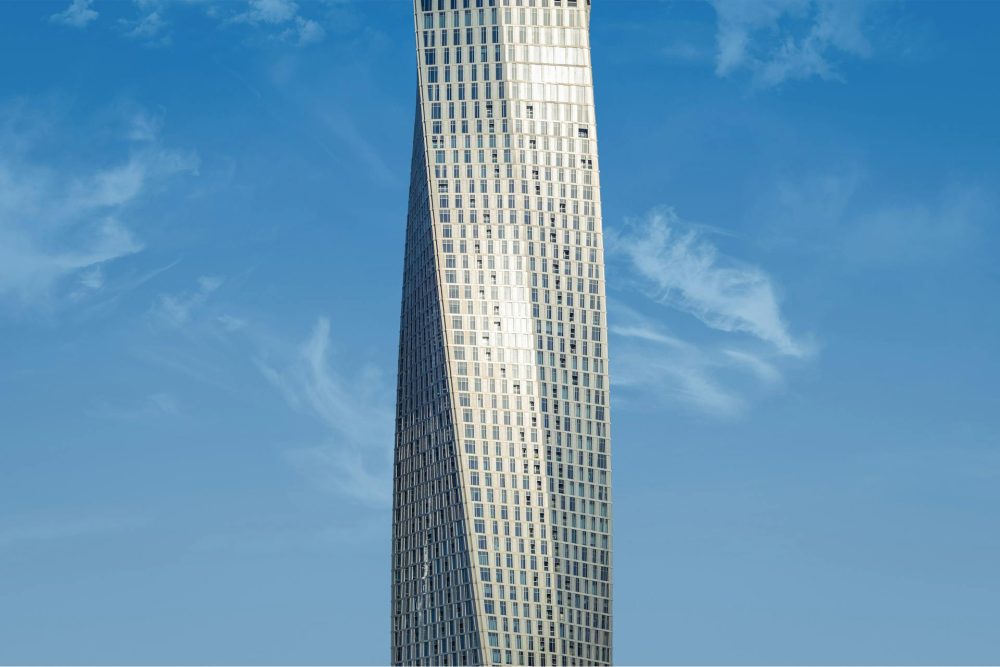
Genesis 11 opens with a telling phrase: “Now the whole world had one language and a common speech.”
But notice what the people say: “Come, let us build ourselves a city, with a tower that reaches to the heavens, so that we may make a name for ourselves” (Genesis 11:4).
Scholars have often pointed out the obvious sin here: pride, arrogance, a desire to rival God. And they are right. But there is something deeper happening that I did not see until I found myself living it.
The builders of Babel did not wake one day thinking, “Today, I will commit cosmic treason.” They are waking up thinking about survival, fearful of being scattered and forgotten. (Genesis 11:4). Fear, not arrogance, is the engine. They want to build something so impressive, so monumental, that it cannot be dispersed. They want to make a name so they cannot be erased.
And here is where I must confess with real pain. I realize how I have built Babel more times than I can count.
I remember a season about three years into our business when I felt a shift. The early scrappiness had given way to something that looked like success. We had grown our revenue ten times and built a small team. All of a sudden, we had raving clients who were constantly sending us referrals. And something in me changed.
I became obsessed with growth. But it was far from the joy-filled growth of the early days. I watched as our success created an anxious growth. I would lie awake thinking about what competitors were doing, whether we were differentiated enough, and whether my name would be remembered. I wanted to build something so undeniably excellent that no one could ignore it.
Every stone I laid was a desperate attempt to prove that I mattered, that I was different, that I could not be dispersed or forgotten.
And the worst part? I told myself it was “for the kingdom.”
But it was not. It was for me. I had convinced myself that my success was God’s success. I had created a theological framework that allowed me to pursue Babel while calling it the Sermon on the Mount.
Research shows that 72% of entrepreneurs experience mental health issues, rates significantly higher than the general population. We have made our reputations our refuge and built our identity into outcomes we cannot ultimately control.
I remember the precise moment I noticed this in myself. We had landed a major client, and I felt a rush of vindication. But then, three months later, that client cancelled and left with a hefty unpaid balance to the tune of ₱70,000 ($1,200) and 30% of our monthly revenue. My joy was directly tied to my metrics. Peace was hostage to my performance.
I was not building a business, but a tower. Block Ten Strategy was becoming my Babel. Every stone I laid was a desperate attempt to prove that I mattered, that I was different, that I could not be dispersed or forgotten.
The tragedy is that this kind of building is exhausting. It is never going to be enough. There is always another metric to hit, another million to make, another client to acquire, another competitor to outpace, another way you could be greater.
And God, in His mercy, did not let me stay there.
Solomon and The Drift Through Abundance

But there is another dangerous trajectory.
Solomon’s story begins in 1 Kings 3 with what appears to be spiritual maturity. He becomes a young king, then has a dream where God appears to him and asks, “What shall I give you?” (1 Kings 3:5).
Solomon does not ask for fame, wealth, or military dominance. He asks for wisdom. More specifically, he asks for an understanding heart so he can discern between good and evil (1 Kings 3:9).
God is so pleased with this request that He grants Solomon not just wisdom, but also “riches and honor” beyond measure (1 Kings 3:13). Solomon’s reign becomes legendary. In time, his wisdom becomes highly in demand across nations.
And then something happens that is barely narrated, almost slipped in as an aside. In 1 Kings 11, we read, “King Solomon, however, loved many foreign women… As Solomon grew old, his wives turned his heart after other gods, and his heart was not fully devoted to the Lord his God, as the heart of David his father had been” (1 Kings 11:1-4).
This is the part that haunts me. Solomon did not wake up one morning and decide to abandon God. Again, like Babel’s builders, he drifted. What happened to Solomon is what I see happening to almost every Christian builder I know who has experienced real success.
The drift looks like this:
First, success becomes normal. When you hit your first million, it feels miraculous. When you branch out, it feels like a sign of God’s favor. But when success becomes a pattern, and growth becomes expected, something shifts. You stop marveling and start strategizing.
Then, expansion becomes the default. You stop asking “Should we grow?” and start asking “How fast can we grow?” The question is no longer about stewardship but momentum.
Then, God’s presence becomes background noise. You still pray. You still attend church. You still talk about God’s faithfulness. But your actual decision-making is driven by metrics instead of prayer. Your strategy time dwarfs your prayer time. You are running on the fumes of old spiritual capital while building new spiritual debt.
Finally, you discover that your heart has turned away. Not in some dramatic moment. Not in rebellion. But in the slow, subtle accumulation of a thousand small choices where you chose to optimize for success rather than seek God’s face.
I lived this. I drifted.
I remember a conversation with a mentor where he asked me a simple question: “When was the last time you prayed before making a major business decision?”
I could not answer because I had not. I had prayed about decisions after making them. I had prayed for the outcomes I had already determined. But I had not actually sought God’s counsel in the decision itself.
He pressed further: “And when was the last time the answer to your prayer actually changed what you were going to do?”
Silence.
That conversation broke me because I realized that I had become like Solomon. Sure, not in my sins. Ces is definitely still the only woman in my life (apart from my two beautiful daughters). I haven’t bowed down to another idol. But I had undoubtedly drifted. I had allowed the very blessings of God to become the mechanism by which I drifted from God.
The kingdom was flourishing, and the metrics were strong. Our reputation was solid.
But my soul was slowly starving.
The Cross and Where Jesus Settled Our Identity Once and For All
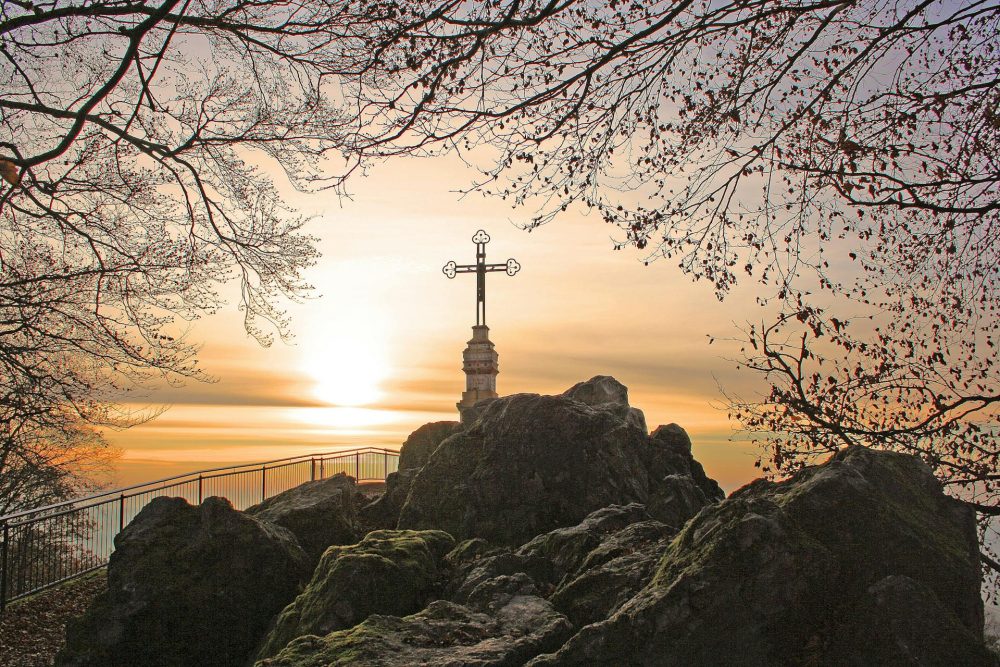
Once, I sat down with a successful Christian leader. His encouragement to me was to preach the gospel to myself every day. I thought that was such baloney. I knew what the gospel was. I grew up in church for crying out loud!
Today, I realize how naively misinformed I was.
I had to learn, and what I believe every Christian builder needs to hear: The cross is not just about your salvation in the afterlife. The cross is about your freedom from needing to build Babel in this life.
Listen to what Paul writes in 1 Corinthians 1:25: “For the foolishness of God is wiser than human wisdom, and the weakness of God is stronger than human strength.”
The cross demolishes every justification for identity-building. It says:
- Your verdict is already settled. Christ bore your judgment.
- Your shame is already absorbed. Christ took your place.
- Your reputation does not save you. Christ’s righteousness covers you.
- Your competence does not justify you. Christ’s perfection stands for you.
- Your failure does not condemn you. Christ’s resurrection guarantees your future.
When our identity is rooted in Christ’s finished work, we are liberated to build differently.
When Christ hung on that cross, he was publicly shamed, stripped naked, mocked as a failure by the very people He came to save. He endured all of that to secure something far more valuable than any reputation. He was securing your freedom from ever needing to prove yourself again.
- Now, we bear Christ’s righteousness. Not ours.
- We carry His character. Not ours.
- We live by His Spirit. Not our flesh.
- We hold His infinite divine value. Not our moral bankruptcy.
Hebrews 12:2 tells us that Jesus “for the joy set before him endured the cross, scorning its shame.” He willingly bore the ultimate public humiliation so that you would never need public validation to know your worth.
This changes everything about how we work. In Colossians 3:17, Paul writes: “And whatever you do, whether in word or deed, do it all in the name of the Lord Jesus, giving thanks to God the Father through him.”
When our identity is rooted in Christ’s finished work, we are liberated to build differently.
I felt this most acutely in a season of real failure. A major initiative collapsed. We closed a website project that was supposed to last 6 months, but went on for a year. And we lost close to $1,500 on that project. I expected to feel destroyed. I expected the emotional freefall I had experienced in earlier seasons when my worth was tied to my outcomes.
But something was different. Because I had begun to understand that the verdict I was afraid would come had already come. It came at the cross. And it was not condemnation. It was forgiveness. The judgment, the exposure, the revelation that I was not as competent or exceptional as I claimed was erased. I miss the mark, but Christ washes me clean and makes me holy enough to step into the inner courts.
I was no longer building to escape judgment. I was building from a place where my worth had already been purchased at an infinite price: the blood of the Blameless Lamb. The relief was immense.
Building From the Gospel
Here is what becomes possible when your identity is anchored in Christ rather than in your outcomes:
You can pursue excellence without ego. Excellence is no longer about proving yourself—it is about honoring God and serving others well. You can take pride in craftsmanship without needing the credit.
You can hold credibility lightly. Your reputation becomes a tool you steward, not a foundation you stand on. If you lose it, you will not lose yourself.
You can celebrate growth without desperation. When revenue increases, you can genuinely thank God. When revenue plateaus, you do not spiral into an identity crisis because your identity is not for sale.
You can measure success by formation, not just by scale. You ask: Who am I becoming? Who are we becoming as a team? Are we growing in holiness, in love, in wisdom? These are the metrics that matter when you are building from the gospel.
You can rest without guilt. Sabbath is not laziness. Margin is not a weakness. They are acts of faith—declarations that the kingdom does not rise or fall on your effort, that God is the one who sustains all things.
This is what building from the garden looks like when the cross redeemed the garden for us, and tore down our towers.
The Honest Middle
I need to be honest about something critical: I have not arrived. I still drift. And I probably will again at some point.
But the difference is velocity. I notice it faster than I used to. That’s the true gift. Another mentor whose been coaching me told me that I now have a “discoverability quotient.” I see where I fail, and so I can quickly repent and pivot. Then, I can return to the garden more readily.
Grace has not eliminated my ambition but redeemed it. In some way, it’s also recalibrated it, pointing it toward something that actually lasts. I pray that by reading this account of my folly, you would desire that discoverability quotient too.
For Those Still Building
If you are reading this and you recognize yourself in these pages—in the early garden phase, in the Babel anxiety, in the Solomon drift—there is hope.
The cross is not just a historical event you believe in. It is the present power that frees you to build differently, to work differently, to rest differently.
The questions worth asking are these:
- If your business plateaued tomorrow but your walk with God deepened, would you count that as success?
- When revenue dips, does your worship dip with it? When metrics fail, does faith fail with them?
- Are you multiplying people or multiplying platforms? Are you forming disciples or just extracting value?
- Have you defined what “enough” looks like? Or are you chasing an undefined more?
- Where have you actually planted your identity—in Christ and His finished work, or in your outcomes and your ability to control them?
The garden was small. Babel was magnificent. And yet God walked in the garden. Through the cross, He walks with us again.
May we build accordingly.
